Brand Spotlight: Why Bobbi Brown Still Matters in Modern Beauty
321 views
Beauty trends move at ridiculous speed. One month, everyone wants glass skin; the next, it's blurred lips, heavy contour, or some new technique that requires six brushes and a ring light.
Then there’s Bobbi Brown.
The brand has been around since 1991, yet its central idea still feels surprisingly current: makeup should make you look like yourself, not like somebody applied a completely different face. That sounds obvious now. It wasn't nearly as obvious when Bobbi Brown launched her first ten lipsticks at Bergdorf Goodman in New York.
The first day, she sold 100. That was the number she had expected to sell in an entire month.
Three decades later, the question isn't whether Bobbi Brown is famous. It is. The more interesting question is why the brand remains relevant when beauty consumers have endless alternatives.
The answer sits somewhere between shade intelligence, practical artistry, recognizable products, and a philosophy that hasn't needed to chase every trend.
Bobbi Brown started with a very specific problem
The original idea wasn't built around creating complicated makeup routines.
Brown was working as a professional makeup artist after studying at Emerson College and moving to New York. She became frustrated with the makeup available at the time, particularly the lack of flattering, wearable shades. Her response was to work with a chemist and create lip colors that looked more like natural lips.
That became the foundation for the brand.
The original collection consisted of ten lipsticks launched in 1991. Names and colors were deliberately wearable rather than theatrical, reflecting Brown's preference for enhancing rather than disguising the face.
And that distinction matters.
A lot of modern beauty marketing talks about "natural makeup," but Bobbi Brown was practicing the underlying concept long before the phrase became a social-media category.
The Estée Lauder acquisition changed the scale
Bobbi Brown Cosmetics didn't remain a small artist-led operation forever.
Four years after launch, Estée Lauder Companies acquired the brand. Brown continued to have significant creative involvement for years afterward, while the company gained the infrastructure needed to expand internationally.
That relationship also explains one of the strange things about the brand today: Bobbi Brown Cosmetics carries Bobbi Brown's name, but Bobbi Brown herself eventually left the company.
She departed in 2016. Four years later, she launched another beauty company, Jones Road Beauty, taking her minimalist philosophy into a new business rather than simply recreating the original brand.
For consumers, that distinction is worth remembering.
Bobbi Brown Cosmetics and Bobbi Brown the makeup artist are no longer the same business.
The philosophy overlaps, but the corporate ownership and product development are different.
Why the products still make practical sense
There's a reason some Bobbi Brown products have survived far longer than the average beauty trend.
Take the brand's approach to correcting discoloration. Instead of piling concealer over a dark under-eye area and hoping for the best, Bobbi Brown's current system separates color correction from skin-tone coverage.
Its Color Corrector currently sells for $35 for 0.05 oz (1.4 g), with shades such as Light Bisque, Light Peach, Bisque, Peach, Dark Bisque, Dark Peach, Very Deep Bisque and Very Deep Peach. The company recommends Bisque-family shades for blue or purple discoloration and Peach-family shades for brown, green or gray discoloration.
That sounds technical.
In practice, it's simple.
If the darkness underneath your eyes has a bluish-purple cast, a skin-colored concealer may not neutralize it effectively. A corrector deals with the underlying color first; concealer goes over it afterward.
Bobbi Brown's own current application guidance follows that sequence: corrector first, then a skin-true concealer.
It's the kind of advice that actually survives outside a studio.
You can use it at 7 a.m. before work. You can use it when you're tired. You don't need professional lighting or fifteen minutes of blending.
Shade matching is still one of the brand's strengths
Foundation is where "natural-looking" makeup either works or falls apart.
Pick the wrong undertone and even an otherwise excellent formula can look orange, pink, gray, or strangely disconnected from the neck.
Bobbi Brown continues to put significant emphasis on undertones. Its current Skin Full Cover Concealer, for example, lists shades with descriptions that distinguish yellow, pink, red, olive and neutral characteristics rather than relying solely on broad depth categories. The product is currently listed at $35 for 8 ml on the U.S. site.
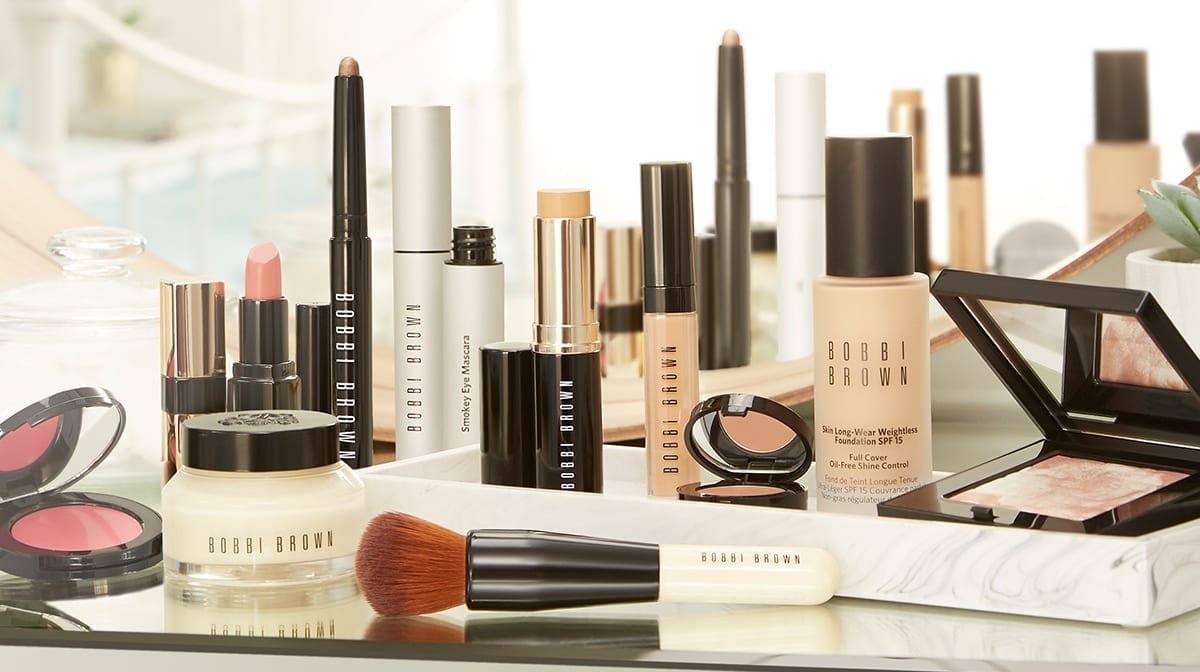
Its Weightless Skin Foundation SPF 15 is listed in 53 shades, with the brand specifically describing the range as having undertone-correct shades.
That is more useful than simply saying a foundation is "inclusive."
A genuinely useful shade system helps someone understand why a shade works.
The real-world advantage: you don't need the entire collection
This is where Bobbi Brown's philosophy becomes especially attractive.
Modern beauty can create enormous routines. Primer. Corrector. Foundation. Concealer. Cream contour. Powder contour. Bronzer. Cream blush. Powder blush. Highlighter. Setting powder. Setting spray.
It can become a second job.
Bobbi Brown's current brand positioning still emphasizes multitasking products, simple how-to guidance and makeup designed for "real-life" moments.
A practical routine could be much smaller:
Prep the skin.
Correct only where discoloration actually needs correction.
Apply foundation where coverage is necessary.
Add concealer selectively.
Finish with blush or another simple color product.
That restraint is part of the appeal.
You aren't necessarily buying Bobbi Brown because you want the most dramatic transformation possible. You're buying it because you want the face underneath the makeup to remain visible.
And yes, some products are expensive
The premium positioning is impossible to ignore.
For example, the current U.S. Bobbi Brown site lists its Intensive Serum Foundation SPF 40/30 at $84 for 30 ml, while the Weightless Skin Foundation SPF 15 is listed at $57 for 30 ml. Its Color Corrector is $35, and Vitamin Enriched Eye Cream & Primer is listed at $66 for 15 ml.
Those aren't drugstore prices.
For someone building a complete everyday kit on a budget, Bobbi Brown may not be the most economical route. A cheaper foundation can absolutely perform well, and there are plenty of excellent concealers below the prestige category.
The smarter approach is selective spending.
Buy the product that solves your particular problem. Don't buy the entire philosophy in a shopping bag.
The brand has also learned how beauty actually gets used
One particularly interesting part of Bobbi Brown's modern identity is its educational content.
The company doesn't merely present a product and leave you to figure it out. Its current Artistry 101 guidance, for example, explains how to handle discoloration on different skin tones and recommends a sequence of foundation, corrector, concealer and powder rather than treating every face as the same canvas.
That's useful because technique often matters as much as formula.
A fantastic concealer applied too heavily can still look cakey. A mediocre foundation used selectively can sometimes look surprisingly good.
I've found that this is one of the biggest differences between beauty advice that sounds impressive and advice people actually use: the latter accounts for mistakes.
People apply too much. They choose a shade from a screen. They forget that indoor lighting can make a foundation look different from daylight. They put powder everywhere because that's what a tutorial showed them.
Bobbi Brown's strongest teaching tends to pull in the opposite direction.
Use less. Look at your skin. Correct the actual problem.
Bobbi Brown's legacy is bigger than its product catalog
The brand helped establish a beauty philosophy that now feels almost unavoidable: natural-looking makeup doesn't have to mean no makeup.
That middle ground matters.
Brown's Pretty Powerful campaign, introduced in 2010, used real women rather than relying exclusively on conventional beauty imagery. The associated Pretty Powerful Campaign for Women & Girls later supported nonprofit organizations focused on empowering women and girls through education. Estée Lauder Companies says more than $1.9 million has been contributed to the Pretty Powerful Fund.
The brand has also become genuinely global. Bobbi Brown says its cosmetics are available in more than 60 countries and through major retailers including Sephora, Macy's, Harrods, Selfridges and others, alongside freestanding stores.
That reach matters because longevity in beauty isn't created by nostalgia alone.
A product has to keep finding new customers.
Bobbi Brown versus the beauty trends of 2026
Here's the interesting contradiction.
Beauty culture now moves faster than ever, yet many consumers are becoming more interested in routines that feel manageable.
Bobbi Brown doesn't have to compete with every viral product. Its advantage is that its core proposition doesn't expire when a trend does.
A heavily sculpted cheek can go out of fashion.
A good concealer won't.
A particular eyeshadow color can disappear from social feeds.
Knowing your undertone won't.
A complicated ten-step makeup technique may become yesterday's content.
Learning where to place a small amount of corrector is still useful.
That's why the brand's older ideas keep resurfacing in newer beauty language.
What Bobbi Brown is — and isn't — good for
Best suited to | Less compelling if you want |
|---|---|
Natural-looking everyday makeup | Extremely dramatic editorial looks |
Practical complexion correction | Heavy full-face transformation |
Undertone-focused shade matching | Constant novelty |
Simple, polished routines | The cheapest possible routine |
Mature or realistic everyday makeup needs | Trend-chasing for its own sake |
Makeup artistry with minimal fuss | Maximum pigment at every step |
The sweet spot is everyday sophistication.
Not invisible makeup. Not theatrical makeup.
Just makeup that looks intentional without looking like the makeup arrived five minutes before you did.
Frequently asked questions
Is Bobbi Brown still a good makeup brand?
Yes, particularly if you value wearable complexion products, undertone-focused shades and practical application techniques. The brand remains active globally and continues to develop products around skin-first makeup.
Is Bobbi Brown owned by Estée Lauder?
Yes. Estée Lauder Companies acquired Bobbi Brown Cosmetics in 1995, four years after the brand launched.
Did Bobbi Brown leave her own makeup brand?
Yes. Bobbi Brown left the namesake company in 2016. She later founded Jones Road Beauty in 2020.
Is Bobbi Brown makeup worth the price?
It depends on what you're buying. Some products command prestige prices, so buying selectively makes more sense than automatically replacing an entire routine. Current U.S. examples include $35 for Color Corrector and $57 for Weightless Skin Foundation SPF 15.
What makes Bobbi Brown different from modern minimalist makeup brands?
Its minimalist philosophy isn't a recent marketing invention. The original brand was built around wearable color, natural-looking enhancement and solving practical makeup problems, years before "no-makeup makeup" became a major beauty trend.
Why Bobbi Brown still matters
Bobbi Brown's staying power isn't really about being old.
It's about being useful.
The beauty industry can make simplicity sound revolutionary every few years, but Bobbi Brown was already building products around that idea in 1991. The brand's strongest modern offerings continue to focus on undertones, targeted correction, wearable coverage and techniques that don't require a professional makeup artist standing beside the bathroom mirror.
That doesn't mean every Bobbi Brown product will be perfect for everyone. Some prices are steep. Some formulas will suit particular skin types better than others. And the existence of a famous brand name shouldn't replace checking shades, ingredients, finish and your actual needs.
But the underlying lesson has aged remarkably well.
Makeup doesn't have to hide the person wearing it.
If you're exploring Bobbi Brown for the first time, don't start by buying five products because they're popular. Start with the one problem you actually want to solve—under-eye darkness, uneven tone, foundation matching, or simply a more polished everyday finish—and build from there. That's probably the most Bobbi Brown way to approach beauty in 2026.
Bobbi Brown makeup
beauty legacy brands
professional cosmetics
makeup history
natural makeup
Found this helpful? Share it!